


Sofa sizes — what you should know and what you should pay attention to?
You've found a model you like. The fabric is perfect, the shape is exactly what you need. You order it. And then it turns out that the sofa either rests against the wall or looks lost in a large room. To avoid this, you should figure out the dimensions before opening the catalog. In this article, we will analyze what sizes sofas come in, how they differ and how to make a choice without mistakes.
Standard dimensions: first steps
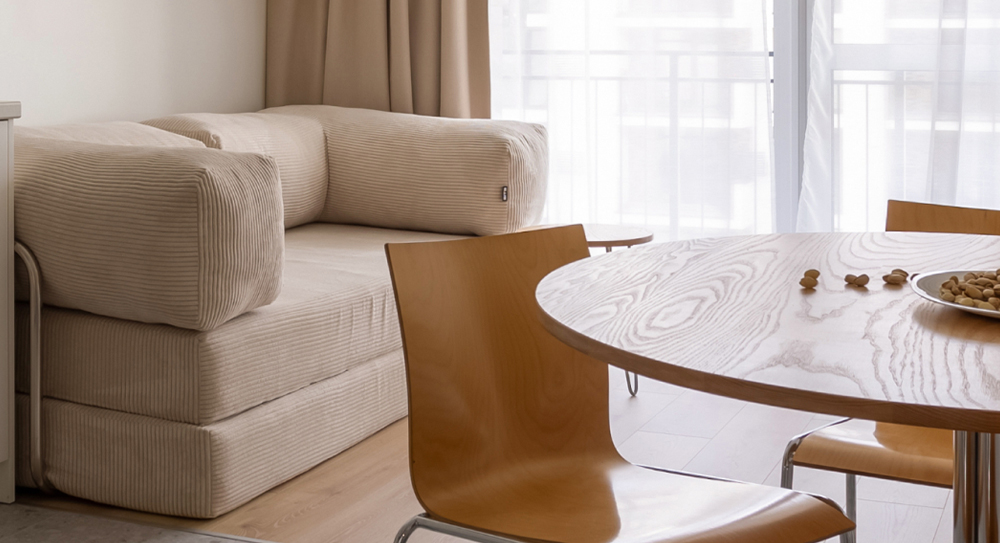
Dimensions consist of several parameters: length, seat depth, backrest height, height from the floor. Each of them affects both comfort and how the furniture will fit into the space. The standard length of a straight sofa is from 180 to 240 cm. Models up to 180 cm are suitable for small rooms, studios or if the sofa is needed mainly for sitting, not for lying down. Sofas from 200 to 240 cm are comfortable for relaxing while lying down and look good in spacious living rooms. Models from 250 cm are already large configurations, mostly corner or U-shaped.
The seat depth usually ranges from 55 to 75 cm. A greater depth is a softer, naturally ergonomic fit for long lying. A smaller one is a stricter silhouette and a more comfortable fit for those who sit on the sofa mostly flat and use it for work. The seat height from the floor is usually 42–48 cm: this range is considered ergonomically optimal for most people.
Dimensions of corner sofas
For corner models, the dimensions are indicated by two values - the length of each side. For example, 250×180 or 300×180 cm. The smaller side is usually located along a short wall. A corner sofa 200×150 cm is suitable for a room from 18 sq. m. For comfortable placement of a 300×200 configuration, at least 20–22 sq. m. m. Also consider that corner sofas are left and right - depending on which side the long module is located.
Dimensions of modular systems
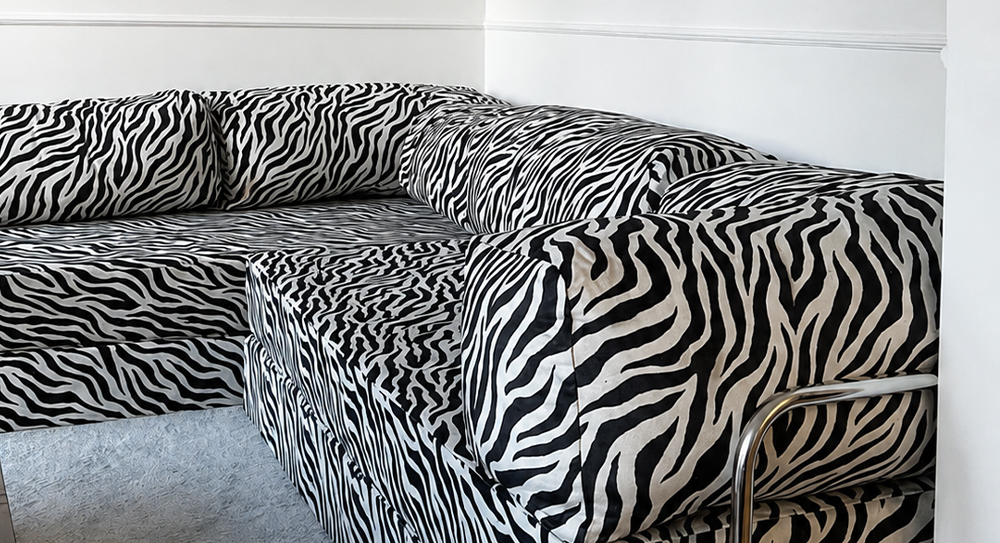
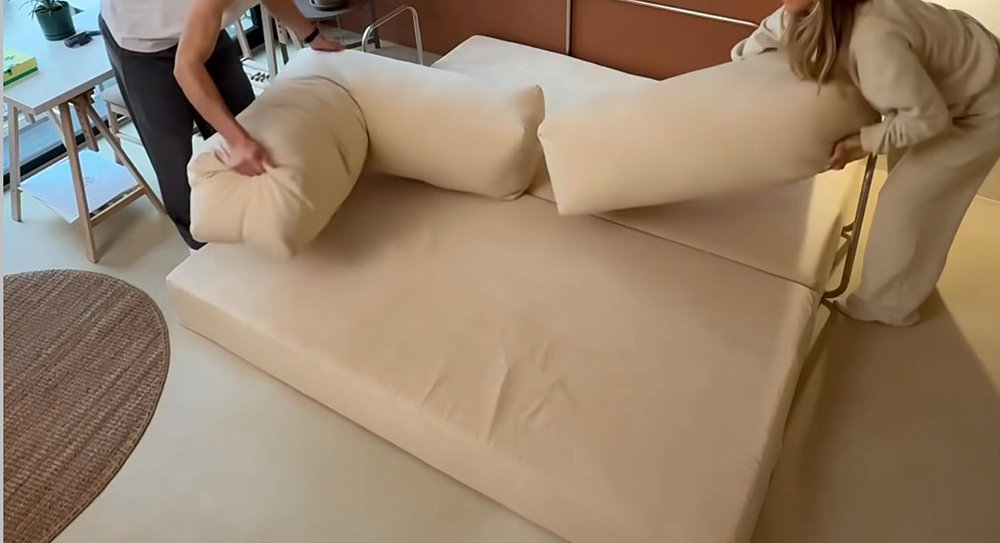
Modular sofas do not have a single standard size - they consist of separate sections, each with its own dimensions. The typical width of one module is from 80 to 120 cm. By assembling three or four modules, you will get a configuration for a specific space. This is how the Sita Horns line is built. The basic Horns Base module is 200×100 cm, the corner configuration Horns Corner is 300×100 cm. You can order a single sofa, corner or transformer, depending on how much space you have and how you plan to use the space.
How to measure the space for a sofa — step-by-step instructions
Before flipping through the catalog, measure the room. This takes ten minutes, but will save you from returning the product. Measure the length of the wall along which the sofa will stand. Subtract at least 15–20 cm from it on each side - these are the indentations from the walls and furniture nearby. If the sofa will stand in a corner, take into account both walls. Record the resulting maximum length - this is the upper limit when choosing a model.
The second step is the depth. Measure the distance from the wall to the point where the sofa should end. Leave at least 80–90 cm for free passage. If there is a coffee table in front of the sofa, consider its depth plus 30–40 cm of space between it and the sofa.
The third step is the height. If a picture, shelf or window is planned above the sofa - measure the distance from the floor to the obstacle and compare it with the height of the back of the selected model. Most often this is not critical, but sometimes it comes as a surprise.
How to choose the size of the sofa to the area of the room
The selected model should be proportional to the room. Even the most beautiful configuration will look inappropriate if it does not correspond to the scale of the space.
For a room up to 15 sq. m, a straight sofa with a length of 160–190 cm is optimal. It will not block movement and leave room for other zoning. A corner sofa in such conditions is suitable only if the room is square, and the sofa is compact - no more than 200×150 cm. Rooms from 18 to 25 sq. m allow you to put straight sofas up to 230 cm or corner sofas up to 260×180 cm. There is already space for a normal passage and the ability to put a coffee table without crowding. Spacious living rooms from 30 sq. m open up options for U-shaped configurations and large modular systems.
The influence of ceiling height
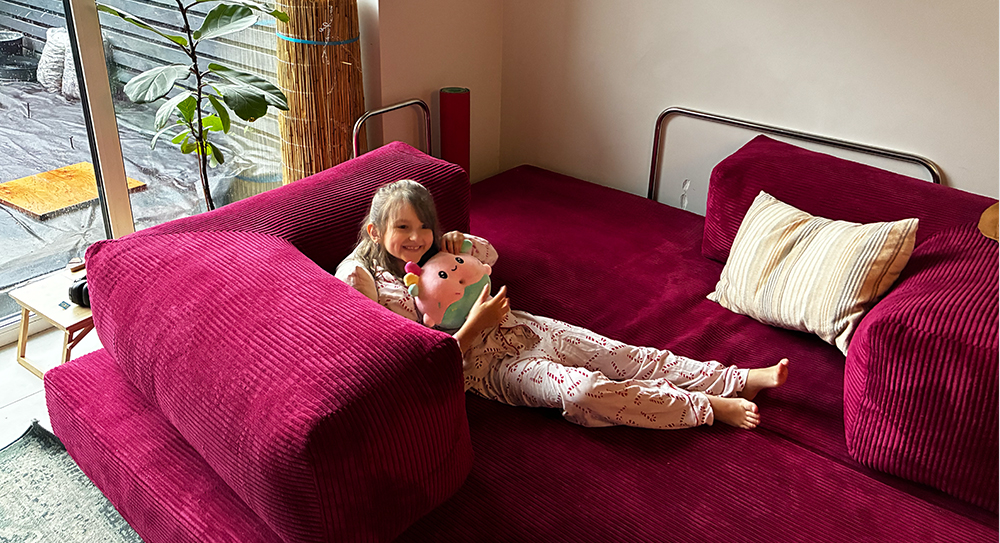
The height of the sofa back is also a dimensional parameter that is often ignored. Low backs (up to 80 cm) visually expand the space and are suitable for rooms with low ceilings. High backrests (90 to 110 cm) give a feeling of "protection" and look good in spacious rooms with ceilings from 2.7 m. For standard apartments with a ceiling height of 2.6–2.7 m, the optimal backrest is 80–90 cm. All models higher than this risk visually reducing the space.
How to choose the size of the sofa. Summary and guidelines
The right choice is three simple steps: measure the space, determine the method of use, check the proportions. To summarize: the sizes of sofas vary from 140 cm for compact single-seater options to 350+ cm for large corner configurations. The most common format for two or three people is 200–230 cm long and 85–95 cm deep. This is a golden mean that suits most apartments.
Sita manufactures frameless sofas in Kyiv, and each model can be ordered in a specific configuration. If you have already measured your space and are looking for a sofa that will fit it exactly, browse the Horns collection or contact us to find the right option. Or come to our space at 32 Beloruska St. and test the furniture in person!